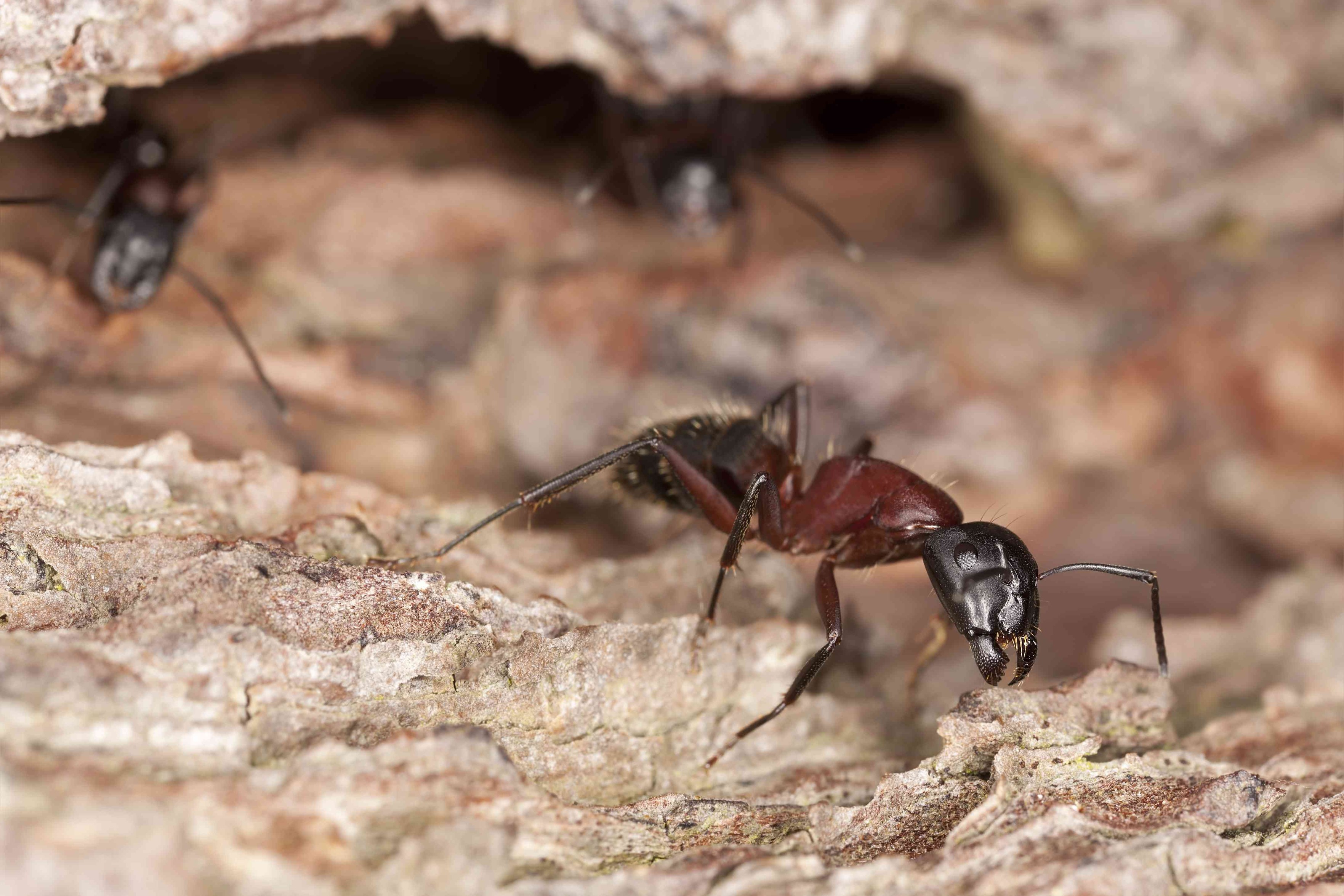
As far as I understand (granted, I don't understand that much, but...) there is a legitimate and actively debated position in philosophy of mind and cognitive science regarding ant colonies.
-
As far as I understand (granted, I don't understand that much, but...) there is a legitimate and actively debated position in philosophy of mind and cognitive science regarding ant colonies.
That is, colony-level cognition may be real, not metaphorical. Ant colonies:
- integrate information over time
- exhibit memory (via pheromone landscapes)
- solve optimisation problems
- adapt flexibly to novel conditions
- show something like attention (resource allocation shifts)
And so some researchers argue this is not merely "as" if cognition, but a distributed cognitive system with the colony as the unit of mind. The individual ant is then closer to a neuron than an organism.
If that’s right, we are likely mislocating the issue by insisting such cognition must be skull-bound, unified, and introspective. The view stretches cognition beyond where we’ve been comfortable!
-
As far as I understand (granted, I don't understand that much, but...) there is a legitimate and actively debated position in philosophy of mind and cognitive science regarding ant colonies.
That is, colony-level cognition may be real, not metaphorical. Ant colonies:
- integrate information over time
- exhibit memory (via pheromone landscapes)
- solve optimisation problems
- adapt flexibly to novel conditions
- show something like attention (resource allocation shifts)
And so some researchers argue this is not merely "as" if cognition, but a distributed cognitive system with the colony as the unit of mind. The individual ant is then closer to a neuron than an organism.
If that’s right, we are likely mislocating the issue by insisting such cognition must be skull-bound, unified, and introspective. The view stretches cognition beyond where we’ve been comfortable!
@Cognessence they also fight wars (colony vs colony), which is p nuts i think
idk if there are other animals doing that
-
@Cognessence they also fight wars (colony vs colony), which is p nuts i think
idk if there are other animals doing that
@Cognessence not meaning to swerve your actual point there btw, which is super interesting imo
be good to read more on that
-
@Cognessence not meaning to swerve your actual point there btw, which is super interesting imo
be good to read more on that
@sean_ae Nah, I actually now think that that should be included in the list! I somehow didn't think of it, but inter-colony conflict surely fits very naturally into the same framework.
As in, if you take the colony more as a cognitive unit, then warfare is less an embarrassing exception and maybe one of its clearest expressions.
Either way, it was nice reading your post because even as a kid I thought their warring was PROPER weird. Like, "who" is deciding to go to war? The ways they unfolded seemed like a lot to happen emergently.
It seems we're often coming back to "agency" these last few days.

-
@sean_ae Nah, I actually now think that that should be included in the list! I somehow didn't think of it, but inter-colony conflict surely fits very naturally into the same framework.
As in, if you take the colony more as a cognitive unit, then warfare is less an embarrassing exception and maybe one of its clearest expressions.
Either way, it was nice reading your post because even as a kid I thought their warring was PROPER weird. Like, "who" is deciding to go to war? The ways they unfolded seemed like a lot to happen emergently.
It seems we're often coming back to "agency" these last few days.
@Cognessence i'm gonna be thinking about this for a bit now
i mean you're right, it's weird; they don't have some despotic leader pushing them into it, and they must be doing it cos it works on some level (not to go full evo but ykwim)
so i wonder if it's just sort of unavoidable once you start organising people
and even as individuals, humans are prob more similar to colonies than we usually let on, with gut bacteria and whatnot
-
As far as I understand (granted, I don't understand that much, but...) there is a legitimate and actively debated position in philosophy of mind and cognitive science regarding ant colonies.
That is, colony-level cognition may be real, not metaphorical. Ant colonies:
- integrate information over time
- exhibit memory (via pheromone landscapes)
- solve optimisation problems
- adapt flexibly to novel conditions
- show something like attention (resource allocation shifts)
And so some researchers argue this is not merely "as" if cognition, but a distributed cognitive system with the colony as the unit of mind. The individual ant is then closer to a neuron than an organism.
If that’s right, we are likely mislocating the issue by insisting such cognition must be skull-bound, unified, and introspective. The view stretches cognition beyond where we’ve been comfortable!
@Cognessence So it's an emergent phenomenon, either way: the cognition or the organism.
This makes perfect sense to me, and meshes neatly with long-standing observations of the same kind about human organisations, as they pass some size threshold.
In that light, the warfare between colonies/orgs looks very much like a punch-up between individuals resulting from interpersonal conflict.
-
@Cognessence i'm gonna be thinking about this for a bit now
i mean you're right, it's weird; they don't have some despotic leader pushing them into it, and they must be doing it cos it works on some level (not to go full evo but ykwim)
so i wonder if it's just sort of unavoidable once you start organising people
and even as individuals, humans are prob more similar to colonies than we usually let on, with gut bacteria and whatnot
@sean_ae Yeah - for me it's one of those things where I "get" the explanation (to a degree), but it can still feel hand-wavey for some reason (I'm not saying it really is, especially given I'm no scientist and am not experimenting with or looking at data in any detail...!)
But for some further clueless wonderings: the behaviour indeed persists because it’s functional as you said, but this doesn’t quite explain the mechanism of coordination, the fine-scale decision-making, or why colonies "remember"- or reliably avoid collapse in complex conflicts. I get it tells you why traits might exist; yet it doesn’t satisfyingly explain how the colony integrates information to make coherent, apparently strategic choices.
The idea that conflict emerges fairly inevitably from an organised system is also probably true, albeit hard to definitely "prove". And yet the question still remains for me: how do colonies achieve near-optimal outcomes repeatedly in dynamic, unpredictable environments? Why do outcomes look so "smart" despite decentralisation? Kind of: why traits exist ≠ how the mechanism works.

I guess that even if we accept that conflict is "functional", the question of agency could always remain: are there emergent decision-level structures that exhibit downward causation? How do colony-level states (like overall threat assessment/resource scarcity) constrain individual ant behavior beyond what local pheromone gradients would predict? How does a colony transition from peace to war - is there something like a phase transition or critical threshold in the network dynamics? Is this pure stigmergy, or is there colony-level information integration? Sorry for all the questions lol. Again, want to emphasise my n00b status here.
It's really nice to think of humans as colonies, so I'm glad you brought that up. The album is okay, but I particularly like the write up Robert Rich did here (on this topic of humans as symbiotic ecosystems w/ their gut bacteria, mitochondria with separate genomes etc.) -

The Biode - Robert Rich
If you are interested in a 5.1 channel high resolution surround version, you can purchase surround downloads from the Surround
Robert Rich (robertrich.com)
-
@Cognessence So it's an emergent phenomenon, either way: the cognition or the organism.
This makes perfect sense to me, and meshes neatly with long-standing observations of the same kind about human organisations, as they pass some size threshold.
In that light, the warfare between colonies/orgs looks very much like a punch-up between individuals resulting from interpersonal conflict.
@KatS Thanks for this! I think you're right that emergence is doing heavy lifting either way. The parallel to human organisations passing size thresholds is interesting - ofc there's something about scale that fundamentally changes how systems behave.
I wonder though if the "punch-up between individuals" analogy might be doing more work than it first appears, though. When two humans fight, we're reasonably confident (!?) about where the agents are: two nervous systems, two experiential centers, two sets of intentions. The interpersonal conflict model assumes we know what counts as a "person" on each side.
But with colonies, that's exactly what remains a bit mysterious to me. If colony-level cognition is real, then yes, it's interpersonal conflict at a different scale. But if it's not - if it's just very sophisticated coordination without any unified agent - then calling it a "punch-up between individuals" might be sneaking in the conclusion rather than arguing for it. We'd be using the human case (where we're more confident about agency) to naturalise the colony case (where that confidence is the thing I'm struggling with lol.)
That said, your intuition might cut deeper than I'm giving it credit for. If humans are already emergent collectives (cells, bacteria, semi-autonomous subsystems), maybe the line between "individual conflict" and "inter-colony conflict" is thinner than I assume. Perhaps what we call interpersonal conflict is already, in some sense, warfare between partially unified coalitions?
But in some specifics I'll admit to still finding mystery. For eg. - colony-level coordination sometimes behaves as if it has memory and prediction, even though no individual ant represents the future. For example, harvester ant colonies have been shown to adjust foraging activity based on past environmental conditions, effectively "remembering" droughts and temperature cycles across days and even seasons. I find that strange!
-
@KatS Thanks for this! I think you're right that emergence is doing heavy lifting either way. The parallel to human organisations passing size thresholds is interesting - ofc there's something about scale that fundamentally changes how systems behave.
I wonder though if the "punch-up between individuals" analogy might be doing more work than it first appears, though. When two humans fight, we're reasonably confident (!?) about where the agents are: two nervous systems, two experiential centers, two sets of intentions. The interpersonal conflict model assumes we know what counts as a "person" on each side.
But with colonies, that's exactly what remains a bit mysterious to me. If colony-level cognition is real, then yes, it's interpersonal conflict at a different scale. But if it's not - if it's just very sophisticated coordination without any unified agent - then calling it a "punch-up between individuals" might be sneaking in the conclusion rather than arguing for it. We'd be using the human case (where we're more confident about agency) to naturalise the colony case (where that confidence is the thing I'm struggling with lol.)
That said, your intuition might cut deeper than I'm giving it credit for. If humans are already emergent collectives (cells, bacteria, semi-autonomous subsystems), maybe the line between "individual conflict" and "inter-colony conflict" is thinner than I assume. Perhaps what we call interpersonal conflict is already, in some sense, warfare between partially unified coalitions?
But in some specifics I'll admit to still finding mystery. For eg. - colony-level coordination sometimes behaves as if it has memory and prediction, even though no individual ant represents the future. For example, harvester ant colonies have been shown to adjust foraging activity based on past environmental conditions, effectively "remembering" droughts and temperature cycles across days and even seasons. I find that strange!
@Cognessence This is where I raise the temperature with "the boundaries of 'self' get fuzzier the closer you look at them"
-
@Cognessence This is where I raise the temperature with "the boundaries of 'self' get fuzzier the closer you look at them"
-
@sean_ae Nah, I actually now think that that should be included in the list! I somehow didn't think of it, but inter-colony conflict surely fits very naturally into the same framework.
As in, if you take the colony more as a cognitive unit, then warfare is less an embarrassing exception and maybe one of its clearest expressions.
Either way, it was nice reading your post because even as a kid I thought their warring was PROPER weird. Like, "who" is deciding to go to war? The ways they unfolded seemed like a lot to happen emergently.
It seems we're often coming back to "agency" these last few days.
-
 F myrmepropagandist shared this topic

