When they first brought the Atta Cephelotes colony to the American Museum of Natural History, there were lots of large soldier ants, guarding the path where the ants, carried their leaves back to their nest, but now having settled in, you see hardly an...
-
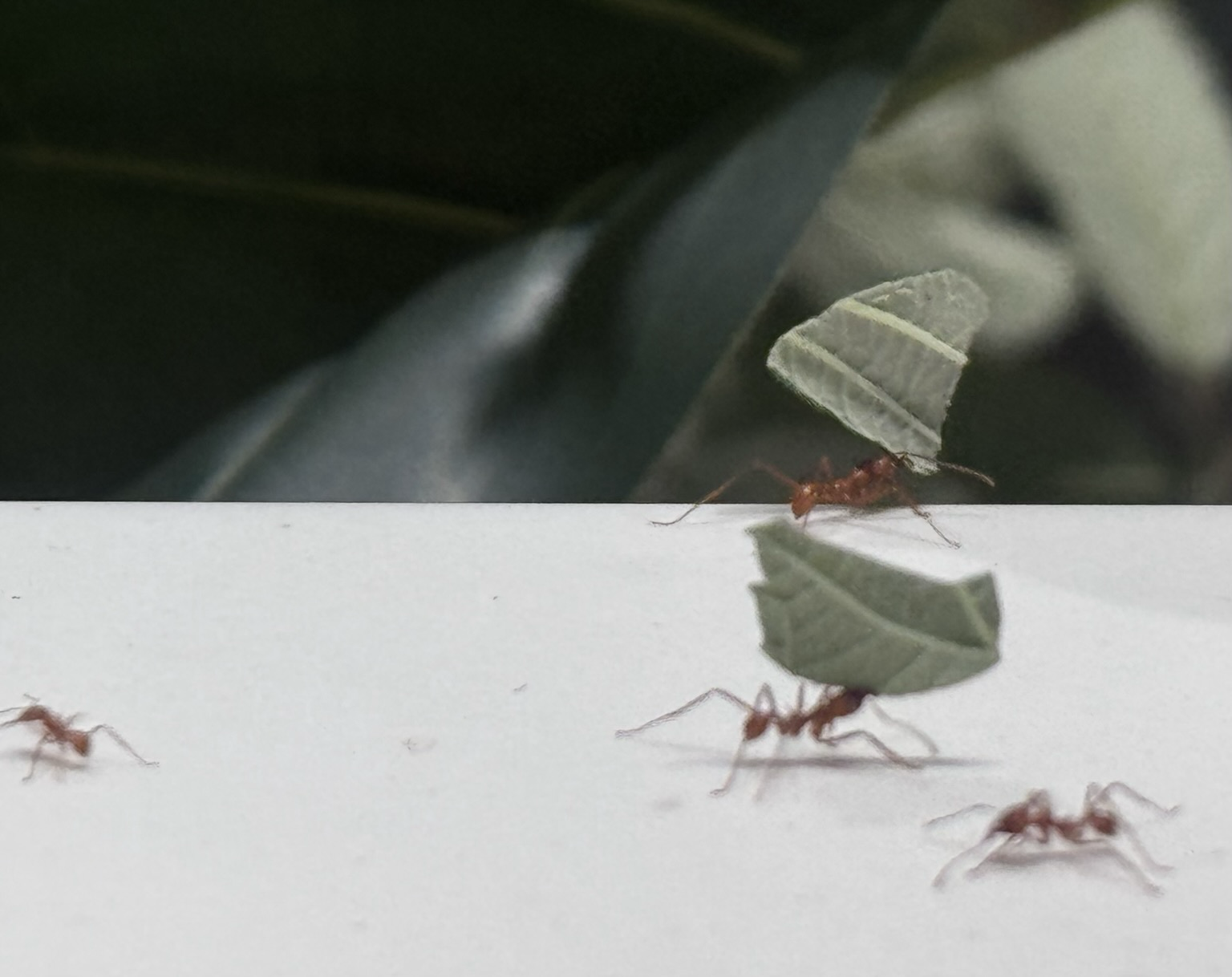
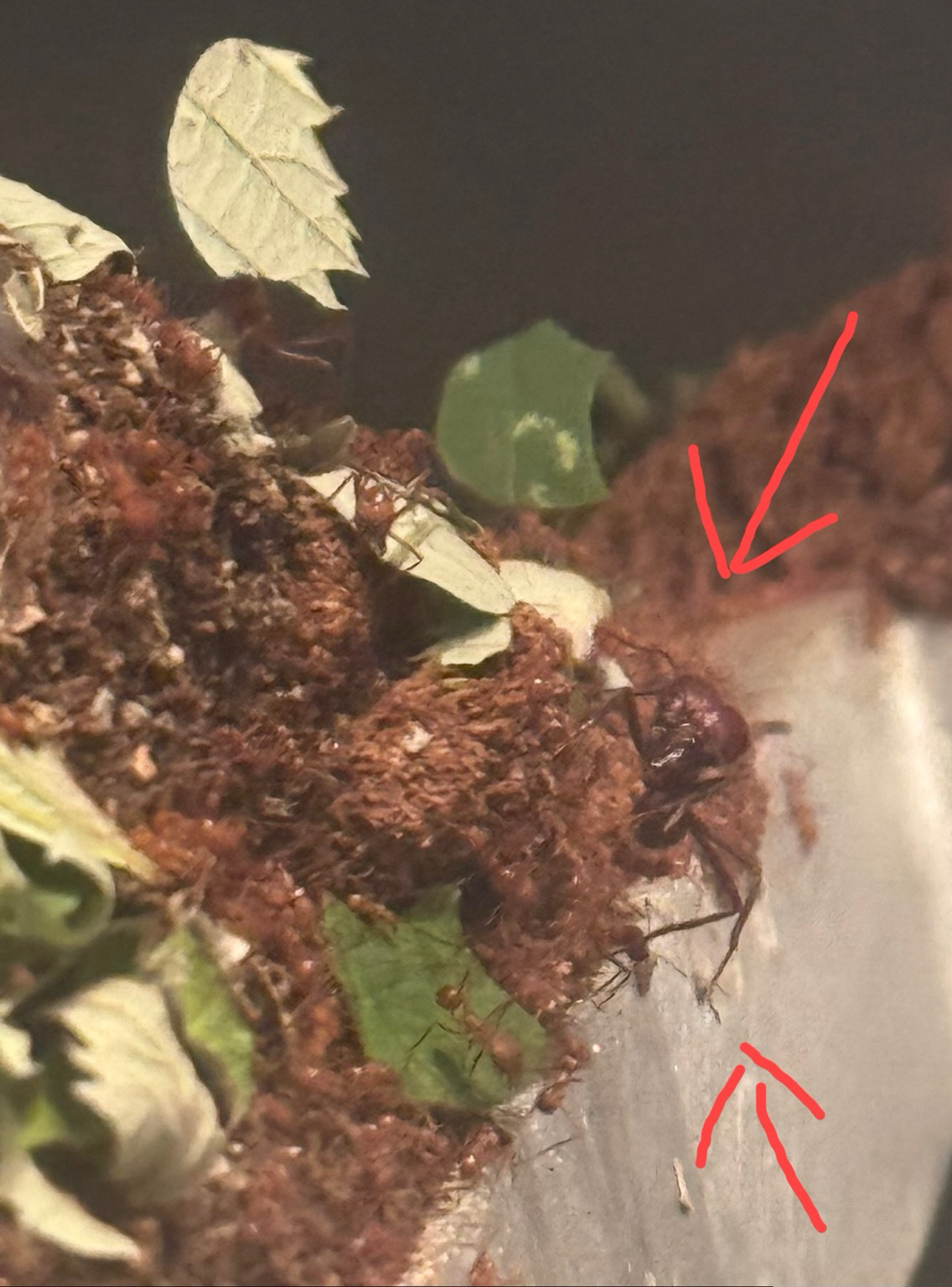
When they first brought the Atta Cephelotes colony to the American Museum of Natural History, there were lots of large soldier ants, guarding the path where the ants, carried their leaves back to their nest, but now having settled in, you see hardly any soldiers at all. I had to look in the nest near what I suspect is the Queen’s chamber to even find one!They may have stopped producing soldiers because, in a closed environment, they just aren’t necessary.
-
When they first brought the Atta Cephelotes colony to the American Museum of Natural History, there were lots of large soldier ants, guarding the path where the ants, carried their leaves back to their nest, but now having settled in, you see hardly any soldiers at all. I had to look in the nest near what I suspect is the Queen’s chamber to even find one!They may have stopped producing soldiers because, in a closed environment, they just aren’t necessary.
Often ants show more intelligence than humans.
-
Often ants show more intelligence than humans.
@GustavinoBevilacqua
I saw several big soldier humans at Grand Central Station just the other day. absolutely terrifying. -
When they first brought the Atta Cephelotes colony to the American Museum of Natural History, there were lots of large soldier ants, guarding the path where the ants, carried their leaves back to their nest, but now having settled in, you see hardly any soldiers at all. I had to look in the nest near what I suspect is the Queen’s chamber to even find one!They may have stopped producing soldiers because, in a closed environment, they just aren’t necessary.
Any time I can get the chance to see that colony I run over there. They are like an old friend.
You notice things about them if you visit more than once... they have good days and bad ones, they sometimes move the queen but I don't know if anyone has caught this happening.
They are at war with their keepers (like all ants) they keep little compost piles to make soil to block openings and reduce light. You can always find one ant who has gotten over the mote.
I love them.
-
 F myrmepropagandist shared this topic
-
Any time I can get the chance to see that colony I run over there. They are like an old friend.
You notice things about them if you visit more than once... they have good days and bad ones, they sometimes move the queen but I don't know if anyone has caught this happening.
They are at war with their keepers (like all ants) they keep little compost piles to make soil to block openings and reduce light. You can always find one ant who has gotten over the mote.
I love them.
I sometimes wish I could keep leaf-cutters, but seeing how relentless and persistent they are ... well. I think it's rather like having a pet bear.
-
I sometimes wish I could keep leaf-cutters, but seeing how relentless and persistent they are ... well. I think it's rather like having a pet bear.
The species with bigger colonies are definitely a handful to keep up with, especially ones on display like that one! We were SO THRILLED to meet the exhibit's curator last summer!
https://flic.kr/s/aHBqjCivx4 -
I sometimes wish I could keep leaf-cutters, but seeing how relentless and persistent they are ... well. I think it's rather like having a pet bear.
-
@futurebird Are they even legal to own?
In the US I think you can get a permit if you live in an area with a proper winter. Which is a little paranoid.