A forum for discussing and organizing recreational softball and baseball games and leagues in the greater Halifax area.
Japanese game developers face ridiculously high font license fees following US acquisition of major domestic provider. Live-service games to take the biggest blow
-
Sorry, you think that they're suddenly going to be paying artists 50 times more as well? No, their pay is probably going to stay right where it is. Monotype executives however, are probably going to be expecting some nice bonuses. This is all assuming that Monotype pays the font artists based on how much their font sells, and not a flat rate to simply create one as a contractor of some kind. I wouldn't know, I know very little about fonts and Monotype. Best thing that studios could do is probably commission their own font artists for a more reasonable amount to create a font for them. I guess that also depends on how much time and effort it takes artists to create a font, and how much they charge. Depending on the price, that may also be difficult to do for a smaller studio. This could all have been prevented if writing kanji in slightly different ways wasn't something that could be copyrighted, or if Monotype hadn't raised prices so much.
-
Its more likely they increased the price and immediately starting shaking down anyone who was paying for the old license price. Its a frustrating scummy tech company "strategy" that unfortunately works because someone at a developer or publisher will be willing to pay the hike if it means avoiding any legal battle.
-
Excellent time for Japanese devs to collectively develop some open-source fonts. Many hands make light work.
-
It's artwork, like any other visual element in a game. The problem is price-gouging. Japan should set national maximum rates. You drew every fucking kanji in a cool new style? Great, here's some money. Emphasis on some.It's *debatably* artwork. Every single person has their own handwritten "font" - more than one if you write cursive and block letters. A font doesn't have a message or a meaning, it is just a means for conveying information through text. I'm sure you can produce several examples of specific fonts that qualify as "artwork" (though it's just a numbers game since there are literally hundreds of thousands of different fonts on the web, if not more) but that doesn't prove that every font is automatically "artwork". We could also make the claim that every drawing is an artwork depending on how we define the word, but that doesn't mean that every nine-year-old who draws an "original character" that's just a green Sonic the Hedgehog should be able to use the legal system to bully other people because he's an "artist".
-
Excellent time for the Japanese to drop ideogram/logogram system and have an alphabet like a functional language.Why? And what constitutes a "functional language" to you? Is the fact that they can read, write, speak, and understand the language not "functional" enough for you? The point gets across to the person receiving the message. You can even translate it to a "functional language" of your choice, with some restrictions. Translation restrictions aren't isolated to Japanese either, there's lots of languages that have things which don't translate well, or at all, to English.
-
Not a fan of generative works, but this seems like a clear place to use it to fuck shit up. Nih.hira.term.aigen.ttf Nih.katak.term.aigen.ttf Nih.kanji1.term.aigen.ttf Nih.kanji2.term.aigen.ttf Etc Not the fault of the prompter if the resulting fonts appear to resemble licensed fonts, which are often slightly different copies of each other anyway. Generative works cannot be copyrighted, so it would forever be in the public domain. The only drawback would be that you would have to announce that you used slop in your game.Free fonts exist, so you don't even need to resort to AI.
-
> Sorry, you think that they're suddenly going to be paying artists 50 times more as well? You've already established that it's okay to switch to AI to save money, we're now just dickering about the specific price. You were the one who introduced the 50-times threshold, I'm not concerned about being so specific. > I guess that also depends on how much time and effort it takes artists to create a font, and how much they charge. Depending on the price, that may also be difficult to do for a smaller studio. Indeed, AI tends to be more economically beneficial for smaller studios. It's one of the things I like about it.
-
"Font" and "licensing" are not words that belong together. "Oh, I took the alphabet and made it slightly different - you know, like every single person who ever learned how to write - only I did it on a computer so now you have to pay me forever if you want your computer to write like mine does".Font and alphabet are not the same thing. Obviously nobody can or should own the letter E, but you pretend that the font creator's work adds nothing to that. 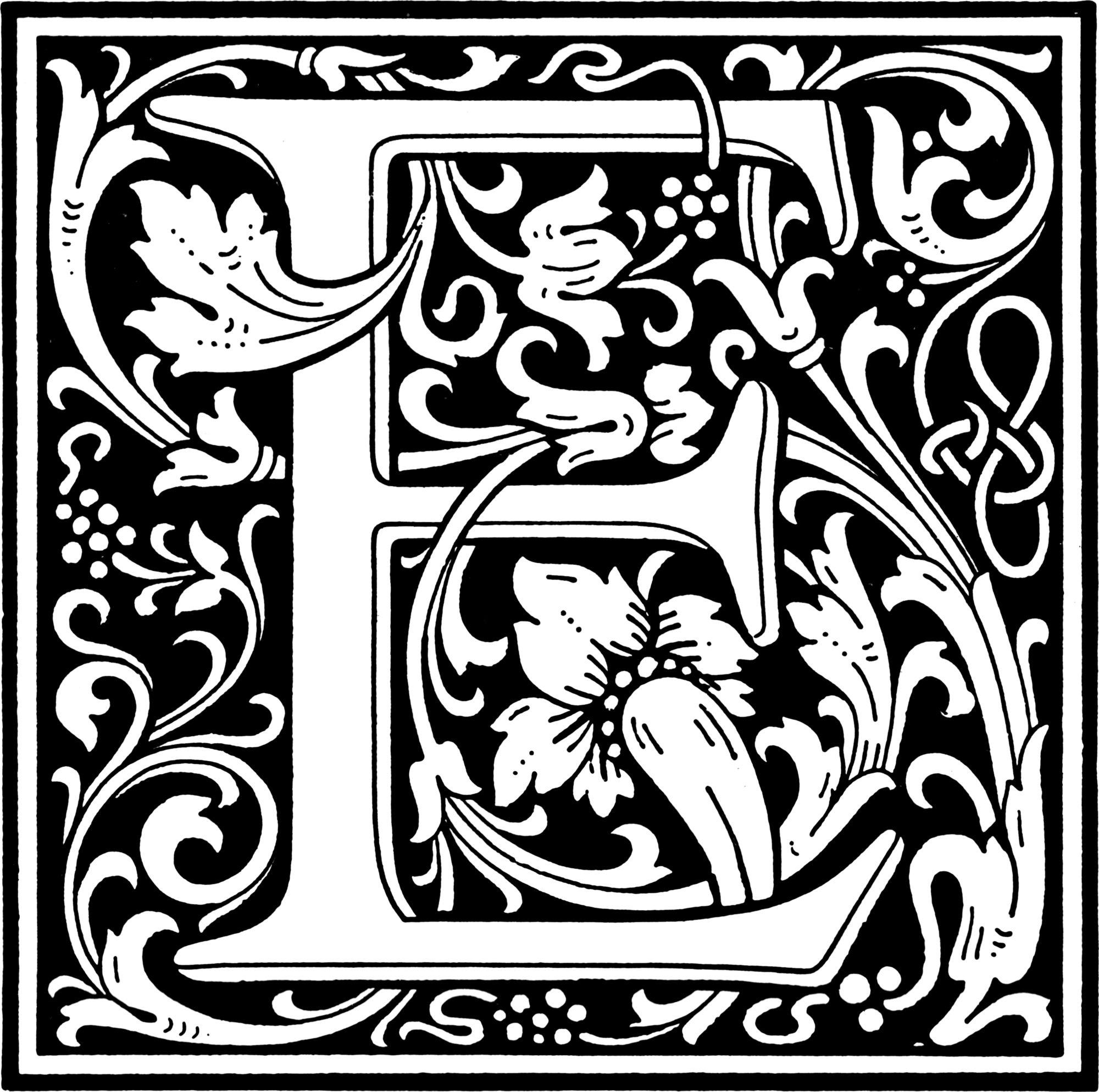 Someone had to do the work to make it look nice, beyond just being an E.
-
It's *debatably* artwork. Every single person has their own handwritten "font" - more than one if you write cursive and block letters. A font doesn't have a message or a meaning, it is just a means for conveying information through text. I'm sure you can produce several examples of specific fonts that qualify as "artwork" (though it's just a numbers game since there are literally hundreds of thousands of different fonts on the web, if not more) but that doesn't prove that every font is automatically "artwork". We could also make the claim that every drawing is an artwork depending on how we define the word, but that doesn't mean that every nine-year-old who draws an "original character" that's just a green Sonic the Hedgehog should be able to use the legal system to bully other people because he's an "artist".It's absogoddamnlutely artwork. As much as the game itself, as mere software, is artwork. Someone put a ton of tedious work into every font you consider boring. Typography is a whole field of study, balancing aesthetic and practical concerns, and you want to roll your eyes and insist that only Wingdings is *real* art. > We could also make the claim that every drawing is an artwork *Yes.* These aren't scribbled alphabets - which by the way are really fucking hard to do, when every copy of a letter has to look the same and still *feel* handwritten. These are letterforms conveying a particular tone, in use by industry professionals, for *three thousand characters.* Japanese has like three and a half alphabets to start with, and then Kanji is a whole mess of stolen Chinese ideograms. And they're fucking complicated. If you think you can bang that out with the effort of a child's crayon doodle, to the quality necessary for commercial video game projects, I invite you to try. Apparently it'd come in handy.
-
It's *debatably* artwork. Every single person has their own handwritten "font" - more than one if you write cursive and block letters. A font doesn't have a message or a meaning, it is just a means for conveying information through text. I'm sure you can produce several examples of specific fonts that qualify as "artwork" (though it's just a numbers game since there are literally hundreds of thousands of different fonts on the web, if not more) but that doesn't prove that every font is automatically "artwork". We could also make the claim that every drawing is an artwork depending on how we define the word, but that doesn't mean that every nine-year-old who draws an "original character" that's just a green Sonic the Hedgehog should be able to use the legal system to bully other people because he's an "artist".I very much don't want some corporation to be able to just take a 9 year old's drawing and slap it on their game because someone thought it wasn't artsy enough to be awarded protection.
-
Excellent time for the Japanese to drop ideogram/logogram system and have an alphabet like a functional language.... they already have two syllabaries. They're not about to upend their whole writing system just to maintain foreign intellectual property.
-
I will gladly replace dishwashers with dishwashing machines if they are energy, water, and cost-efficient, but I don't believe we are discussing artisan dishwashing. This borderline association approaches sophistry, so I think it is much better to discuss the use of art and the corporate hoarding of artwork. [Monotype does seem to pay font creators well for royalties.](https://foundrysupport.monotype.com/hc/en-us/articles/15769163469076-Monotype-Fonts-Royalty-Model-FAQ). My frustration is the aggressive pricing models, the growth of monotype to where they own the whole market (per tfa), and the way they are [demanding payment for fonts without checking to see if there is an existing license.](https://www.insanityworks.org/randomtangent/2025/11/14/monotype-font-licencing-shake-down). Basically, I will encourage and pay for fair business practices. Squeezing people for cash pisses me off. I'm not knowledgeable enough to pretend to create a free font set in this manner, but I would advocate creating tools that would fuck up the market. Open fonts would be great, but again tfa says that it's too complicated of a data set for that, and the market is too small for independent artists. Lastly, my answer wasn't a valid solution. There are plenty of legal and social hurdles to it.
-
It's absogoddamnlutely artwork. As much as the game itself, as mere software, is artwork. Someone put a ton of tedious work into every font you consider boring. Typography is a whole field of study, balancing aesthetic and practical concerns, and you want to roll your eyes and insist that only Wingdings is *real* art. > We could also make the claim that every drawing is an artwork *Yes.* These aren't scribbled alphabets - which by the way are really fucking hard to do, when every copy of a letter has to look the same and still *feel* handwritten. These are letterforms conveying a particular tone, in use by industry professionals, for *three thousand characters.* Japanese has like three and a half alphabets to start with, and then Kanji is a whole mess of stolen Chinese ideograms. And they're fucking complicated. If you think you can bang that out with the effort of a child's crayon doodle, to the quality necessary for commercial video game projects, I invite you to try. Apparently it'd come in handy.I made exactly zero references to effort. Nice strawman. Yes, I'm sure some fonts take *decades* of hard, grueling effort to make. Just like I'm sure the nine-year-old's green Sonic took him a lot of effort too. And no, I'm not implicitly saying it's about talent either, before you accuse me of *that*. Letters belong to humanity. Licensing your version of them because it is "unique" is bullshit because *everyone's* writing is unique. Gatekeeping text presentation for money is so dystopic I have a hard time understanding how you support it, though I do admit your arguments seem to make a lot of sense if we ignore the fact that we're basically discussing a copyright on how to write.
-
Font and alphabet are not the same thing. Obviously nobody can or should own the letter E, but you pretend that the font creator's work adds nothing to that.  Someone had to do the work to make it look nice, beyond just being an E.That is artwork inspired by the letter "E", representing the letter E *plus additional elements*. It's not correct to say that it *is* the letter E. Now open a word processor, choose a font, hold your Shift key and tap the E key. What you'll see on your screen is not "inspired by" the letter E nor does it represent the letter E. It IS the letter E. Therein lies the difference.
-
I very much don't want some corporation to be able to just take a 9 year old's drawing and slap it on their game because someone thought it wasn't artsy enough to be awarded protection.
-
That is artwork inspired by the letter "E", representing the letter E *plus additional elements*. It's not correct to say that it *is* the letter E. Now open a word processor, choose a font, hold your Shift key and tap the E key. What you'll see on your screen is not "inspired by" the letter E nor does it represent the letter E. It IS the letter E. Therein lies the difference.I chose a very extreme example, but it's still just a stylized E, used for text. My word processor also has lots of different E's to choose from, all stylized differently. Where do you draw the line? Serifs? Embossing? Floral motifs? I designed an E. Which side of the line do it belong? 
-
I made exactly zero references to effort. Nice strawman. Yes, I'm sure some fonts take *decades* of hard, grueling effort to make. Just like I'm sure the nine-year-old's green Sonic took him a lot of effort too. And no, I'm not implicitly saying it's about talent either, before you accuse me of *that*. Letters belong to humanity. Licensing your version of them because it is "unique" is bullshit because *everyone's* writing is unique. Gatekeeping text presentation for money is so dystopic I have a hard time understanding how you support it, though I do admit your arguments seem to make a lot of sense if we ignore the fact that we're basically discussing a copyright on how to write.Ah, so you're just saying words recreationally. [There's glory for you.](https://www.gutenberg.org/files/12/12-h/12-h.htm#%3A%7E%3Atext=When I use a word) Fonts are protected works and you seem to understand why - but dismissively pretend an artsy font would be exceptional and distinct, instead of being as protected as any other illustration of the alphabet. None of them somehow own... the alphabet. Just the illustrations. Like any illustration. Even little Billy's shitty Sonic OC has some copyright protections. He can't slap his drawing of Blonic into a video game, but *neither can Sega.* Consider [Futura.](https://en.wikipedia.org/wiki/Futura_(typeface)) You have seen this font a million times and probably thought about it precisely never. It's aggressively plain. But its development is a microcosm of early 20th-century art history, philosophy, and politics, to the point it was treated as degenerate by the actual goddamn Nazis, and then later adopted by them anyway. These boring-ass letters were *innovative.* This one sans-serif font has a five thousand word Wikipedia article. That's not a complicated joke, and it's only partially ingroup fart-sniffing. This is an element of culture you interact with every goddamn day. You're doing it right now. Immense work has gone into designing and rendering whichever generic sans-serif you're reading this in. Yet even if it was still mono-spaced Codepage 437 in green on black, somebody had to draw all those pixels. Somebody decided it needed not one but two smiley faces. And it's protected to the same extent as the BIOS code, one ROM chip over, for all the same reasons. It is an artifact of human labor, under practical constraints, for specific expressive purposes. It can't not be. I've done some Game Boy games. One has a custom font. I just winged it. It's not important. But why would you expect those graphics to be any less protected than all the other sprites I drew?
-
I hear you, and that was my first thought reading through the article. According to TFA: >While games using English can rely on system UI fonts, cheap commercial fonts or open-source options, the sheer number of characters used in Japanese means high-quality fonts are extremely difficult and expensive to make, so few affordable alternatives are available. This is what made LETS an important service, but its revamped pricing and limitations have now put it beyond the reach of a good chunk of developers. Maybe there are alternatives out there, and I think a crowd sourced open font would be a great idea. I personally have no idea how to go about organizing a project of that scope. Also, tbf, my answer was more emotional bitching than a serious take.


