"These vessels represent the first moment in history when people chose to portray the botanical world as a subject worthy of artistic attention," the authors note.
-
"These vessels represent the first moment in history when people chose to portray the botanical world as a subject worthy of artistic attention," the authors note. "It reflects a cognitive shift tied to village life and a growing awareness of symmetry and aesthetics."
“This research contributes to the growing field of #ethnomathematics, which explores how mathematical ideas are expressed through cultural practices and artistic traditions.”
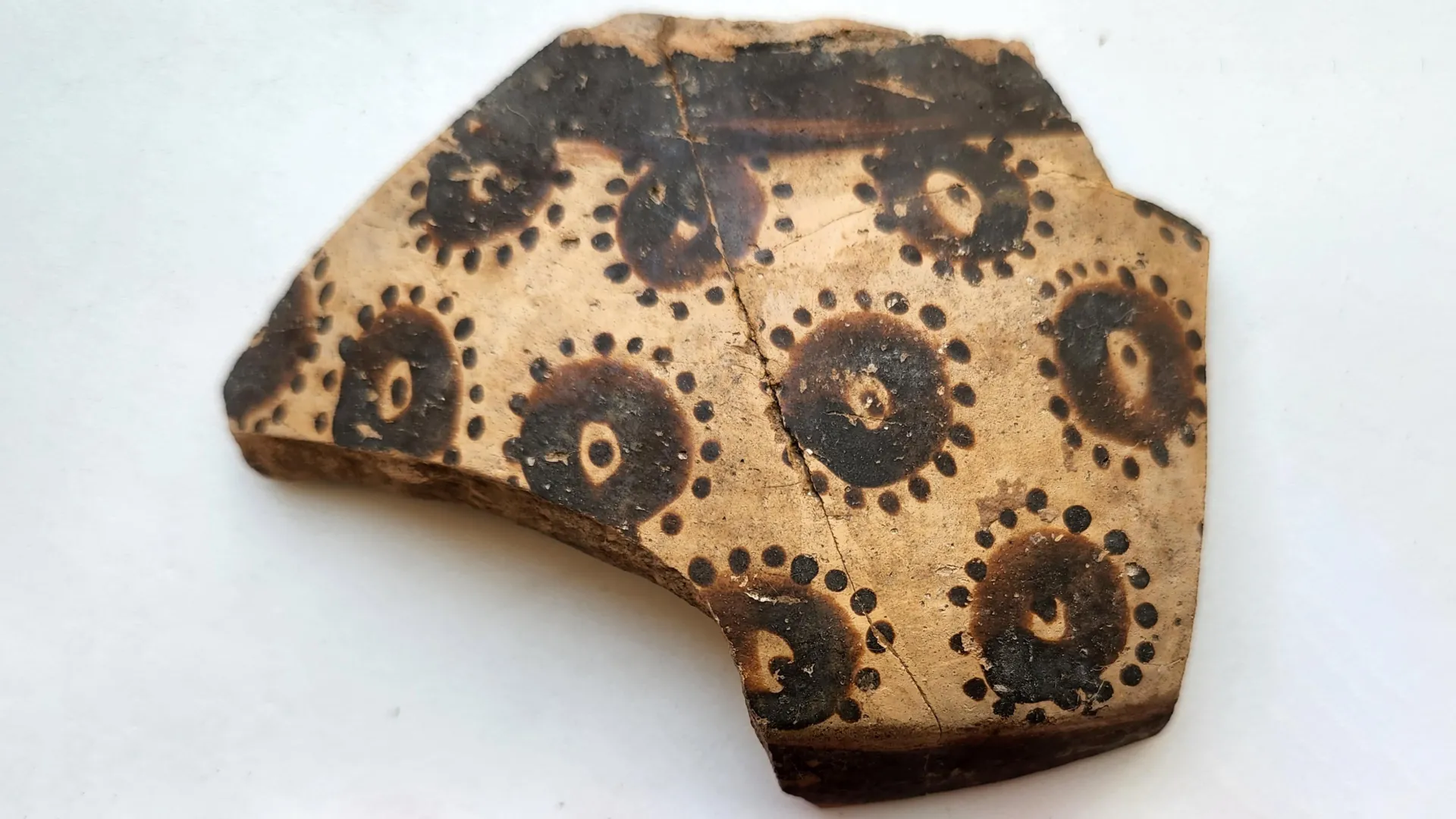
This 8,000-year-old art shows math before numbers existed
Over 8,000 years ago, early farming communities in northern Mesopotamia were already thinking mathematically—long before numbers were written down. By closely studying Halafian pottery, researchers uncovered floral and plant designs arranged with precise symmetry and numerical patterns, revealing a surprisingly advanced sense of geometry.
ScienceDaily (www.sciencedaily.com)
-
 F myrmepropagandist shared this topic
-
"These vessels represent the first moment in history when people chose to portray the botanical world as a subject worthy of artistic attention," the authors note. "It reflects a cognitive shift tied to village life and a growing awareness of symmetry and aesthetics."
“This research contributes to the growing field of #ethnomathematics, which explores how mathematical ideas are expressed through cultural practices and artistic traditions.”
This 8,000-year-old art shows math before numbers existed
Over 8,000 years ago, early farming communities in northern Mesopotamia were already thinking mathematically—long before numbers were written down. By closely studying Halafian pottery, researchers uncovered floral and plant designs arranged with precise symmetry and numerical patterns, revealing a surprisingly advanced sense of geometry.
ScienceDaily (www.sciencedaily.com)
This one is open access so we can see the pdf of the paper here.
https://link.springer.com/article/10.1007/s10963-025-09200-9
-
"These vessels represent the first moment in history when people chose to portray the botanical world as a subject worthy of artistic attention," the authors note. "It reflects a cognitive shift tied to village life and a growing awareness of symmetry and aesthetics."
“This research contributes to the growing field of #ethnomathematics, which explores how mathematical ideas are expressed through cultural practices and artistic traditions.”
This 8,000-year-old art shows math before numbers existed
Over 8,000 years ago, early farming communities in northern Mesopotamia were already thinking mathematically—long before numbers were written down. By closely studying Halafian pottery, researchers uncovered floral and plant designs arranged with precise symmetry and numerical patterns, revealing a surprisingly advanced sense of geometry.
ScienceDaily (www.sciencedaily.com)
"... the Sumerians used the sexagesimal system ... It has been suggested that an earlier, pre-Sumerian decimal system used the number 10 as the base (Lewy, 1949). The Halafian use of the numbers 4, 8, 16 and 32 does not fit any of these systems, and may reflect an earlier and simpler level of mathematical thinking ..."
Sumerian sexagesimal has decimal embedded in it. Binary is kind of natural to geometry and repeatedly dividing regions.
myrmepropagandist (@futurebird@sauropods.win)
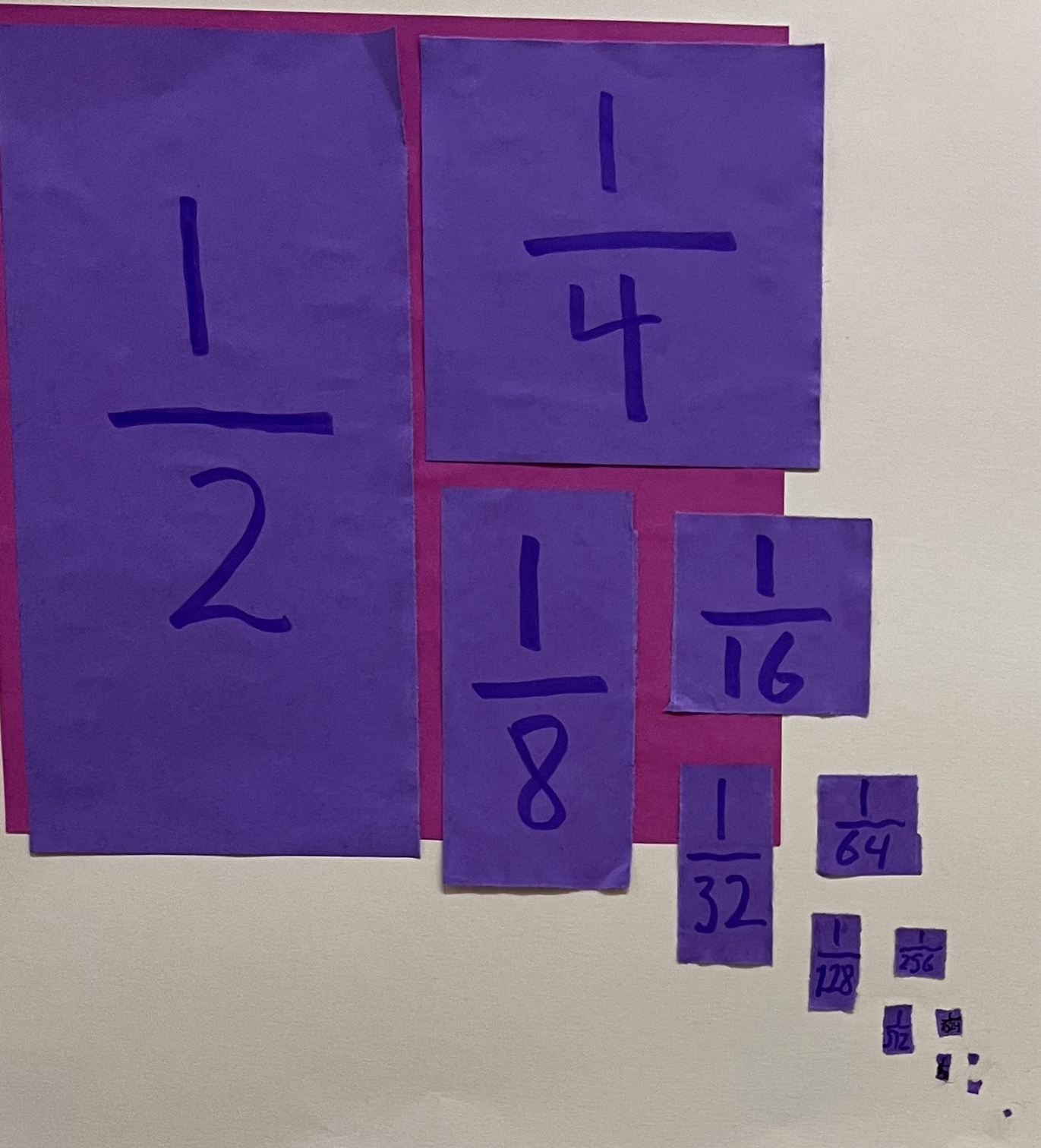
Attached: 3 images I remember doing all sorts of crafts with glue & paper learning fractions but never did we try dividing the paper to infinity— I think this should be something everyone tries. I’d do this with calculus students learning series! The idea of an infinite sum having finite value is just more— believable after you really do it. And I’m trying to get these 6th graders to like fractions. So they just can’t be BORING— #mathEducation #mathematics #series #geometricSeries #binaryNumbers #artsAndCrafts

Sauropods.win (sauropods.win)