I can't be "an ant pretending to be a person on the internet"
-
I can't be "an ant pretending to be a person on the internet"
I post about human stuff all the time and no one has made a computer interface suitable for ants yet. So it's impossible.
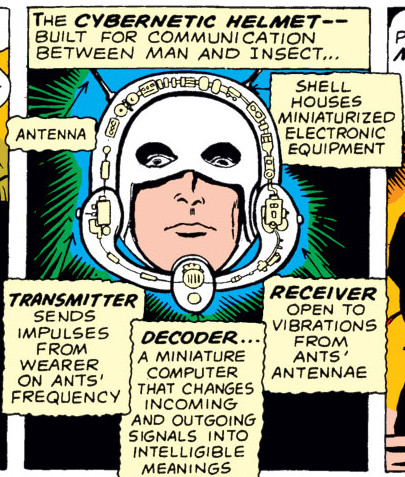
Talk to Hank Pym.
[Diagram of Hank Pym's cybernetic helmet, which allows him to talk to ants]
-
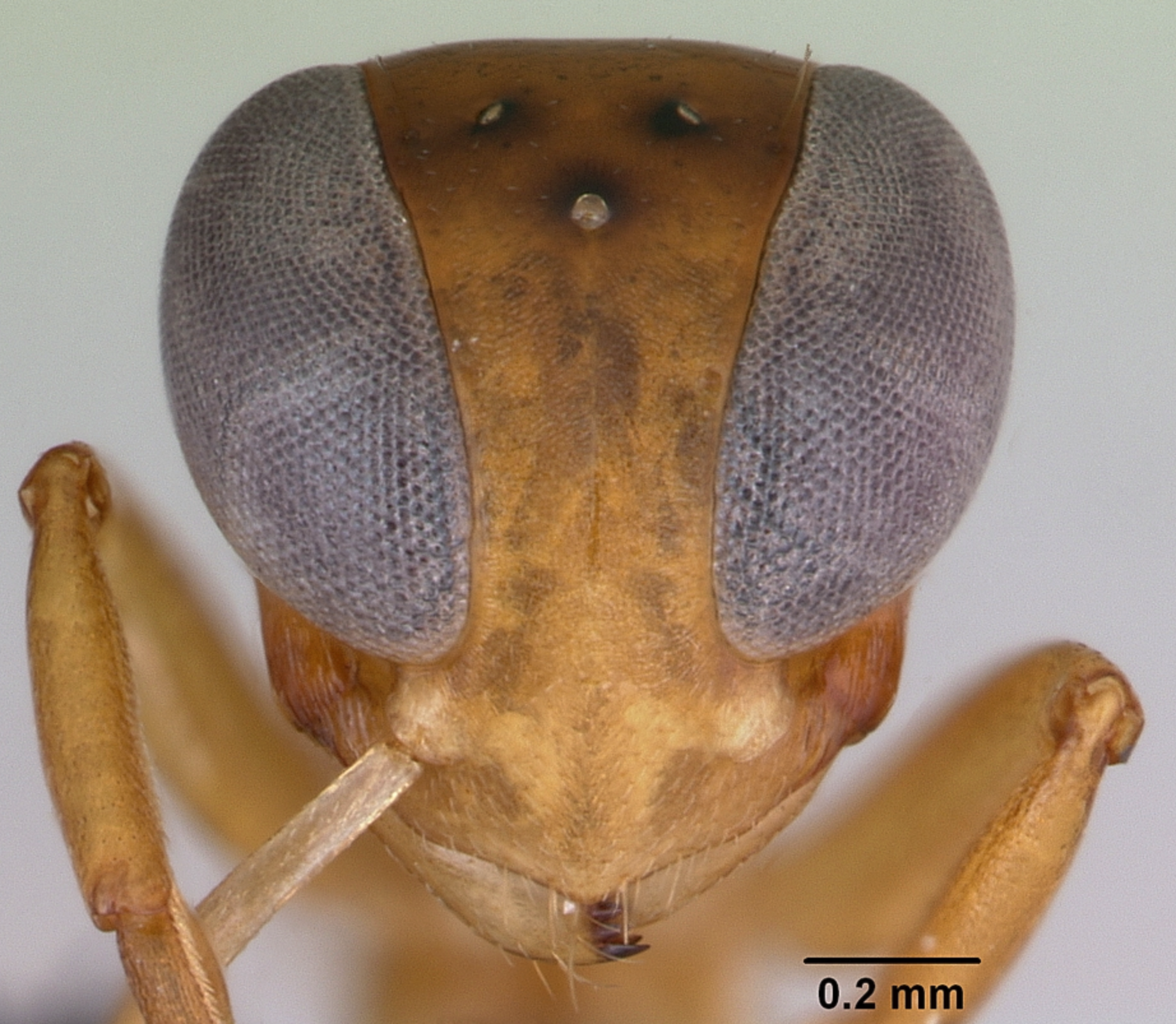
Some ants have pretty big eyes. But smells would be helpful, probably beyond human technological sophistication to make such a thing, though. So yet another reason why it's not possible.
@futurebird How well can they see? I did read a research paper years ago which determined that they could tell the difference between a triangle standing on its base and an inverted one, at least. (It was to do with their use of vision for navigation, IIRC.)
-
@futurebird How well can they see? I did read a research paper years ago which determined that they could tell the difference between a triangle standing on its base and an inverted one, at least. (It was to do with their use of vision for navigation, IIRC.)
It varies by species a great deal. Some of the ants that hunt alone have vision that can rival bees (though probably not as good as bees)
Gigantiops destructor, most Myrmecia, Harpegnathos... but, then you have many army ants who are blind. Their eyes are reduced to simple light detectors if present at all. They hunt in groups by touch.
Myrmecia (common name "bull ants") will track a person walking by their nest, turning as you pass.
I wonder what ants were used in that study?
-
@futurebird How well can they see? I did read a research paper years ago which determined that they could tell the difference between a triangle standing on its base and an inverted one, at least. (It was to do with their use of vision for navigation, IIRC.)
I'm a little obsessed with this large eye'd ant: Santschiella
There is very little information on how she might live. She doesn't have long legs, but still has big eyes like other hunting ants.
What could it mean?
myrmepropagandist (@futurebird@sauropods.win)
Attached: 1 image For on the other side of the Atlantic ocean there is another ant. She also has huge eyes. But, her legs and antennae are shorter and more stout. She isn't closely related to Gigantiops, but really we know very little about this ant. There are no photos of living specimens. There are only three papers. This ant has only been collected a few times in human history. It may well be extinct. Santschiella kohli of Congo and Zaire. One of the only known specimens is the the basement of the AMNH 2/

Sauropods.win (sauropods.win)
-
@futurebird that's all well and good, but do you suppose ants could ride Sea-Doos?
@cjust @futurebird "You're an ant comin' up in a tough neighbourhood. Never caught a break in your whole life. All of a sudden there is a team of scientists outside your door with a Seadoo. Dan look me right in the eye and tell me you don't ride it."
-
It varies by species a great deal. Some of the ants that hunt alone have vision that can rival bees (though probably not as good as bees)
Gigantiops destructor, most Myrmecia, Harpegnathos... but, then you have many army ants who are blind. Their eyes are reduced to simple light detectors if present at all. They hunt in groups by touch.
Myrmecia (common name "bull ants") will track a person walking by their nest, turning as you pass.
I wonder what ants were used in that study?
@futurebird I don't kniw, but could theoretically find out—I took out a subscription to Nature one year, and it'll be somewhere in my pile of them . . .
As I remember, they concluded that the ants seemed to remember navigation information as a sequence of visual "snapshots" at specific locations (I think they mentioned the ants periodically turning round to look back at a landmark they'd recently left). I found it fascinating.
-
@cjust @futurebird "You're an ant comin' up in a tough neighbourhood. Never caught a break in your whole life. All of a sudden there is a team of scientists outside your door with a Seadoo. Dan look me right in the eye and tell me you don't ride it."
The ant's buddies would be thrilled to help him out.
They'd happily cover his shift protecting the queen.
An opportunity like that?
They'd be linin' up around the anthill.How many more opportunities like that you think the ant's going to get?
Not many.
That's the first ant in the colony to ride a sea-doo.
That's his legacy. -
I'm a little obsessed with this large eye'd ant: Santschiella
There is very little information on how she might live. She doesn't have long legs, but still has big eyes like other hunting ants.
What could it mean?
myrmepropagandist (@futurebird@sauropods.win)
Attached: 1 image For on the other side of the Atlantic ocean there is another ant. She also has huge eyes. But, her legs and antennae are shorter and more stout. She isn't closely related to Gigantiops, but really we know very little about this ant. There are no photos of living specimens. There are only three papers. This ant has only been collected a few times in human history. It may well be extinct. Santschiella kohli of Congo and Zaire. One of the only known specimens is the the basement of the AMNH 2/
Sauropods.win (sauropods.win)
@futurebird I ended up trying to count the eye elements. It looks as though there might be about 80 around the perimeter . . . And they might be able to interpolate between "pixels" by moving their heads, maybe?
-
The ant's buddies would be thrilled to help him out.
They'd happily cover his shift protecting the queen.
An opportunity like that?
They'd be linin' up around the anthill.How many more opportunities like that you think the ant's going to get?
Not many.
That's the first ant in the colony to ride a sea-doo.
That's his legacy.@cjust @futurebird They'd be talking about that ant inter-colonial.
Fire ants wouldn't fuck with him.
He rides sea-doos.
-What's the alternative?
-Yeah, what's the alternative?Work on an ant farm?
That ant's got a life on the outside, he's got to live it God dammit.
His hours might have got cut. He might have mouths to feed.
You don't know. His wife's thinking about leaving, taking the kids too.I was out of line.
Well, good people make mistakes, Dan...
(I am so delighted we got to bring this bit up from one of my favourite shows...)
-
@futurebird I don't kniw, but could theoretically find out—I took out a subscription to Nature one year, and it'll be somewhere in my pile of them . . .
As I remember, they concluded that the ants seemed to remember navigation information as a sequence of visual "snapshots" at specific locations (I think they mentioned the ants periodically turning round to look back at a landmark they'd recently left). I found it fascinating.
It might have been bull ants. They have been in a few good vision studies.
I suspect that even ants with poor vision have a map of the area around their nest. You can startle an ant who is foraging (wandering) and she will turn and make an ant-line* for home.
*it's like a "bee line" but with more wiggles. And really ants and bees are related. Why do we have the phrase "bee line" anyway?
-
It might have been bull ants. They have been in a few good vision studies.
I suspect that even ants with poor vision have a map of the area around their nest. You can startle an ant who is foraging (wandering) and she will turn and make an ant-line* for home.
*it's like a "bee line" but with more wiggles. And really ants and bees are related. Why do we have the phrase "bee line" anyway?
@futurebird @timtfj Bees don't seem particularly good at flying straight lines either... or crows for that matter
-
It might have been bull ants. They have been in a few good vision studies.
I suspect that even ants with poor vision have a map of the area around their nest. You can startle an ant who is foraging (wandering) and she will turn and make an ant-line* for home.
*it's like a "bee line" but with more wiggles. And really ants and bees are related. Why do we have the phrase "bee line" anyway?
Though I should also note that carpenter ants and some other ants that are often house pests will NOT do this. They will lead you away from their nest on a wild goose chase. You can only use them to find the nest if they don't detect that there is a large vertebrate around. This means not making vibrations and not letting them get a whiff of your CO2 breath.
Carpenter ants will take you anywhere BUT their nest, as if they have a behavior to make tracking ineffective.
-
Though I should also note that carpenter ants and some other ants that are often house pests will NOT do this. They will lead you away from their nest on a wild goose chase. You can only use them to find the nest if they don't detect that there is a large vertebrate around. This means not making vibrations and not letting them get a whiff of your CO2 breath.
Carpenter ants will take you anywhere BUT their nest, as if they have a behavior to make tracking ineffective.
It's not like I've ever followed a carpenter ant for two hours while she gave me a tour of the forest, my mom's house, the basement, the riverbank... and never hinted at where the nest was once.
Who would follow an ant for that long. Especially after you suspected she was snickering at you.