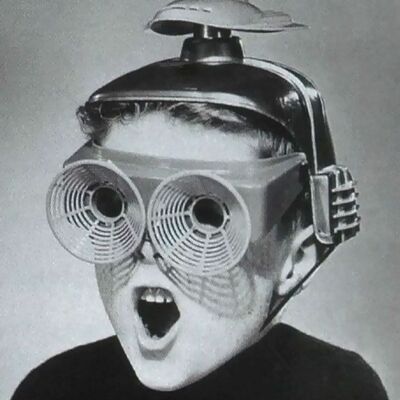
I can't be "an ant pretending to be a person on the internet"
-
@futurebird I don't kniw, but could theoretically find out—I took out a subscription to Nature one year, and it'll be somewhere in my pile of them . . .
As I remember, they concluded that the ants seemed to remember navigation information as a sequence of visual "snapshots" at specific locations (I think they mentioned the ants periodically turning round to look back at a landmark they'd recently left). I found it fascinating.
It might have been bull ants. They have been in a few good vision studies.
I suspect that even ants with poor vision have a map of the area around their nest. You can startle an ant who is foraging (wandering) and she will turn and make an ant-line* for home.
*it's like a "bee line" but with more wiggles. And really ants and bees are related. Why do we have the phrase "bee line" anyway?
-
It might have been bull ants. They have been in a few good vision studies.
I suspect that even ants with poor vision have a map of the area around their nest. You can startle an ant who is foraging (wandering) and she will turn and make an ant-line* for home.
*it's like a "bee line" but with more wiggles. And really ants and bees are related. Why do we have the phrase "bee line" anyway?
@futurebird @timtfj Bees don't seem particularly good at flying straight lines either... or crows for that matter
-
It might have been bull ants. They have been in a few good vision studies.
I suspect that even ants with poor vision have a map of the area around their nest. You can startle an ant who is foraging (wandering) and she will turn and make an ant-line* for home.
*it's like a "bee line" but with more wiggles. And really ants and bees are related. Why do we have the phrase "bee line" anyway?
Though I should also note that carpenter ants and some other ants that are often house pests will NOT do this. They will lead you away from their nest on a wild goose chase. You can only use them to find the nest if they don't detect that there is a large vertebrate around. This means not making vibrations and not letting them get a whiff of your CO2 breath.
Carpenter ants will take you anywhere BUT their nest, as if they have a behavior to make tracking ineffective.
-
Though I should also note that carpenter ants and some other ants that are often house pests will NOT do this. They will lead you away from their nest on a wild goose chase. You can only use them to find the nest if they don't detect that there is a large vertebrate around. This means not making vibrations and not letting them get a whiff of your CO2 breath.
Carpenter ants will take you anywhere BUT their nest, as if they have a behavior to make tracking ineffective.
It's not like I've ever followed a carpenter ant for two hours while she gave me a tour of the forest, my mom's house, the basement, the riverbank... and never hinted at where the nest was once.
Who would follow an ant for that long. Especially after you suspected she was snickering at you.
-
It's not like I've ever followed a carpenter ant for two hours while she gave me a tour of the forest, my mom's house, the basement, the riverbank... and never hinted at where the nest was once.
Who would follow an ant for that long. Especially after you suspected she was snickering at you.
You need better surveillants.
-
I can't be "an ant pretending to be a person on the internet"
I post about human stuff all the time and no one has made a computer interface suitable for ants yet. So it's impossible.
@futurebird I've never for a moment believed you were an ant posting on the internet. A single ant wouldn't be strong enough to push the keyboard keys and isn't smart enough to write posts.
An ant colony posting on the internet, on the other hand...
-
I can't be "an ant pretending to be a person on the internet"
I post about human stuff all the time and no one has made a computer interface suitable for ants yet. So it's impossible.
@futurebird +++ OUT OF CHEESE ERROR +++ MELON MELON MELON +++ REDO FROM START +++
-
It might have been bull ants. They have been in a few good vision studies.
I suspect that even ants with poor vision have a map of the area around their nest. You can startle an ant who is foraging (wandering) and she will turn and make an ant-line* for home.
*it's like a "bee line" but with more wiggles. And really ants and bees are related. Why do we have the phrase "bee line" anyway?
@futurebird I've not properly looked at the paper yet (thanks!) but I looked in the OED and they think "beeline" refers to a bee that's finished foraging ("has collected a full load of nectar") and is going back to the hive. Their earliest quote is from 1828 . . .
-
@futurebird I've not properly looked at the paper yet (thanks!) but I looked in the OED and they think "beeline" refers to a bee that's finished foraging ("has collected a full load of nectar") and is going back to the hive. Their earliest quote is from 1828 . . .
"1828: The bee-hunter . . . encloses them [sc. bees] in a tube, and letting one fly, marks its course, by a pocket compass. Departing to some distance, at right angles to the bee-line just ascertained, he liberates another, observes its course, and thus determines the position of the hive, which lies in the angle made by the intersection of the bee-lines.
American Quarterly Review, June, 377"—OED entry for "beeline"
-
"1828: The bee-hunter . . . encloses them [sc. bees] in a tube, and letting one fly, marks its course, by a pocket compass. Departing to some distance, at right angles to the bee-line just ascertained, he liberates another, observes its course, and thus determines the position of the hive, which lies in the angle made by the intersection of the bee-lines.
American Quarterly Review, June, 377"—OED entry for "beeline"
@futurebird The question is, of course, how you release one bee at once from the tube. Along with the supplementary questions (i) how angry is the bee, (ii) how did it get it into the tube, and (iii) are all areas of vulnerable skin adequately covered?
-
@cjust @futurebird They'd be talking about that ant inter-colonial.
Fire ants wouldn't fuck with him.
He rides sea-doos.
-What's the alternative?
-Yeah, what's the alternative?Work on an ant farm?
That ant's got a life on the outside, he's got to live it God dammit.
His hours might have got cut. He might have mouths to feed.
You don't know. His wife's thinking about leaving, taking the kids too.I was out of line.
Well, good people make mistakes, Dan...
(I am so delighted we got to bring this bit up from one of my favourite shows...)
-
It's not like I've ever followed a carpenter ant for two hours while she gave me a tour of the forest, my mom's house, the basement, the riverbank... and never hinted at where the nest was once.
Who would follow an ant for that long. Especially after you suspected she was snickering at you.
@futurebird I definitely can't imagine anyone doing that, or that if they did, they'd grow up to love ants

(The ones in my compost bin a couple of years ago were interesting. They had lots of pupae(?) on top of the latest layer of leaves, but immediately started moving them out of sight underneath when I took the lid off.
-
@futurebird @timtfj Bees don't seem particularly good at flying straight lines either... or crows for that matter
@cinebox @futurebird My impression is that bees can go pretty straight when they want to, but they might not necessarily want to. (Just an impression, though.) And it's not always in their interests to fly straight (e.g. flying straight to the known food might miss the chance of discovering some food they didn't know about . . . )
-
@futurebird @timtfj I dunno; with six legs and mandibles there could be a sort of braille output??
@Jestbill @futurebird Teaching them Braille certainly sounds like an interesting challenge, at least!
-
@Jestbill @futurebird Teaching them Braille certainly sounds like an interesting challenge, at least!
-
@futurebird @timtfj The book Empire of the Ants (https://en.wikipedia.org/wiki/Empire_of_the_Ants_(novel)) features a computer interface, Dr. Livingstone, which let's humans and ants engage in two-way communication. The book is, however, fiction, but I think it's well worth a read. My layman's interest in ants grew from reading that book as a teenager.
@mikkelricky @futurebird Bookmarked for further investigation at my leisure. And I'm now wondering about a book "Claudius the bee" which I remember my father having. It included mentions of the "Henry Hall box" (a radio, out of which Henry Hall music came), IIRC.